AI + Theory of Constraints

See the constraint.
Solve it.

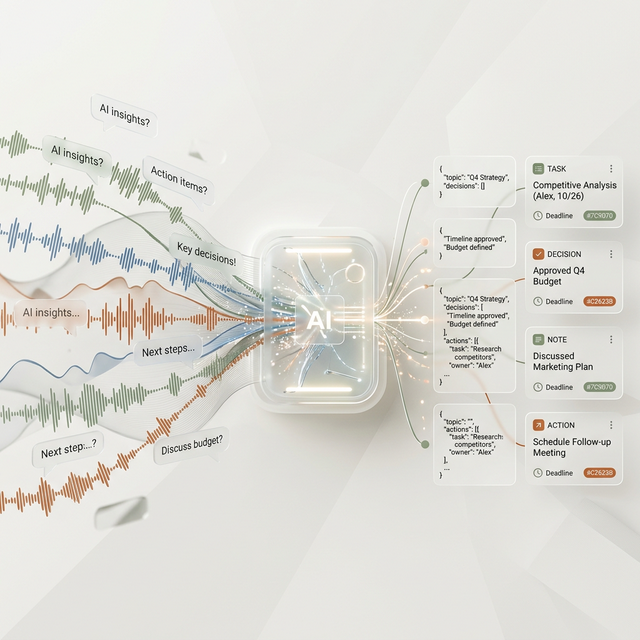
Every system has a bottleneck — the one factor that limits everything else. We find it, and we apply AI to remove it. That's what we do.

Along the way, we cut through to the root cause, abstract the problem, and engineer a solution that reaches far beyond the original issue. That's how our solutions are born.

AI Constraint Untangling

We open what others overlook.

From the Latin aperire — to open, to Reveal. We founded aperAI on a conviction: the fastest path to better performance isn't doing more — it's finding the one thing that holds everything back and resolving it. We pair the discipline of Theory of Constraints with modern AI to make that happen.

Constraint-first thinking

We start where the bottleneck is, not where it's convenient.

AI as a tool, not a buzzword

We deploy AI where it delivers real leverage — not for the sake of it.

Clarity before code

We understand your system deeply before we build anything.

Opening aperture Reveal
aperire — to open Revealing what limits your system so you can move beyond it.

Where constraint theory meets applied AI

Two disciplines, one purpose: removing the bottleneck that governs your system's output.

Theory of Constraints

Developed by Eli Goldratt, TOC is a management philosophy that identifies the single most limiting factor (the constraint) in any system and restructures everything around it. We use its five focusing steps to bring clarity before code.

AI analyzing system constraints

Applied AI

Our models don't replace thinking — they accelerate it. From anomaly detection in process flows to predictive constraint mapping, we deploy AI where it delivers the highest leverage. The result: faster identification, smarter solutions.

The engine behind every engagement

Eli Goldratt's Theory of Constraints gives us a repeatable, disciplined process for finding and removing the single factor that limits any system's performance. Here's how it works — and how we apply it.

1

Identify the Constraint

Every system — whether it's a production line, a software delivery pipeline, or a financial operations workflow — has exactly one bottleneck that limits its total output. The first step is finding it. Not guessing, not assuming, not spreading effort across twenty improvement initiatives. Find the one thing. We use data analysis and AI-assisted process mapping to surface the constraint with precision.

Identify Constraint Visualization
2

Exploit the Constraint

Before adding resources or buying new tools, get the maximum possible output from the constraint as it exists today. This means removing waste, eliminating idle time, and ensuring the bottleneck is never starved of work or blocked by non-essential tasks. Squeeze every drop of capacity from what you already have. Often, this step alone produces dramatic improvements because most constraints are underutilized.

Exploit Constraint Visualization
3

Subordinate Everything Else

This is the step most organizations skip — and it's the one that makes the biggest difference. Every other process, team, and resource must align its pace and priorities to serve the constraint. If it doesn't help the bottleneck, it can wait. This requires discipline. It means saying no to "improvements" that don't move the needle. It means restructuring workflows so the constraint is never the one waiting.

Subordinate Visualization
4

Elevate the Constraint

Only after you've fully exploited and subordinated do you invest in expanding the constraint's capacity. This might mean new tooling, additional staff, or — in our case — a custom AI solution that automates what was previously manual. Invest where it counts, not where it's fashionable. Because you've already extracted maximum value from the existing setup, every euro spent on elevation delivers a disproportionate return.

Elevate Constraint Visualization
5

Repeat — Don't Let Inertia Become the Constraint

Once the constraint is resolved, the system's bottleneck shifts elsewhere. A new constraint emerges. This is expected — it's how systems work. The danger is inertia: clinging to the old processes and priorities that were built around a constraint that no longer exists. Go back to step one. The cycle of improvement never ends. This is what transforms a one-time fix into a culture of continuous, focused improvement.

Repeat Process Visualization

Proven impact in the real world

Explore how we've helped companies find and fix their constraints, generating outsized returns on their AI investments.

What we can do for you

Focused engagements that start with understanding your system and end with a measurable change.

Constraint Diagnostics

A deep-dive analysis combining process mapping, data modelling, and AI-assisted pattern detection to identify the primary constraint in your value chain. We tell you what's actually holding you back — and why.

Throughput Optimization

Hands-on implementation of TOC exploitation and elevation strategies, augmented with custom AI solutions for process simplification, automation, and resource allocation. We build what's needed to remove the bottleneck.

Continuous Improvement Loop

An ongoing partnership where we embed constraint-aware thinking into your operations, helping your team detect, respond to, and resolve shifting bottlenecks as your system evolves.

Let's find your constraint.

Whether you know your bottleneck or just sense something is holding you back — we'd love to hear about it. Every engagement starts with a conversation, not a sales pitch.

hello@aperai.eu
aperAI OÜ — an Estonian company, operating in EU.